
Business ethics advice for marketing freshmen.

Business Ethics
So, since you’re here, we’ve guessed that you’re new to marketing and looking for a little advice on business ethics. We can see it now, you’re raring to go so like a herd of cattle, chomping at the bit for your company become a household name or to build up your professional portfolio. You’re poised on the diving board, toes curled around the end, ready to do a cannonball into the market so consumers can cheer you on.
Whoa! Pump the brakes. There are few things to consider before you jump into that pool of fish because there could be more than a few in there that are ready sink their teeth into your ethically unsound flesh at the drop of a hat.
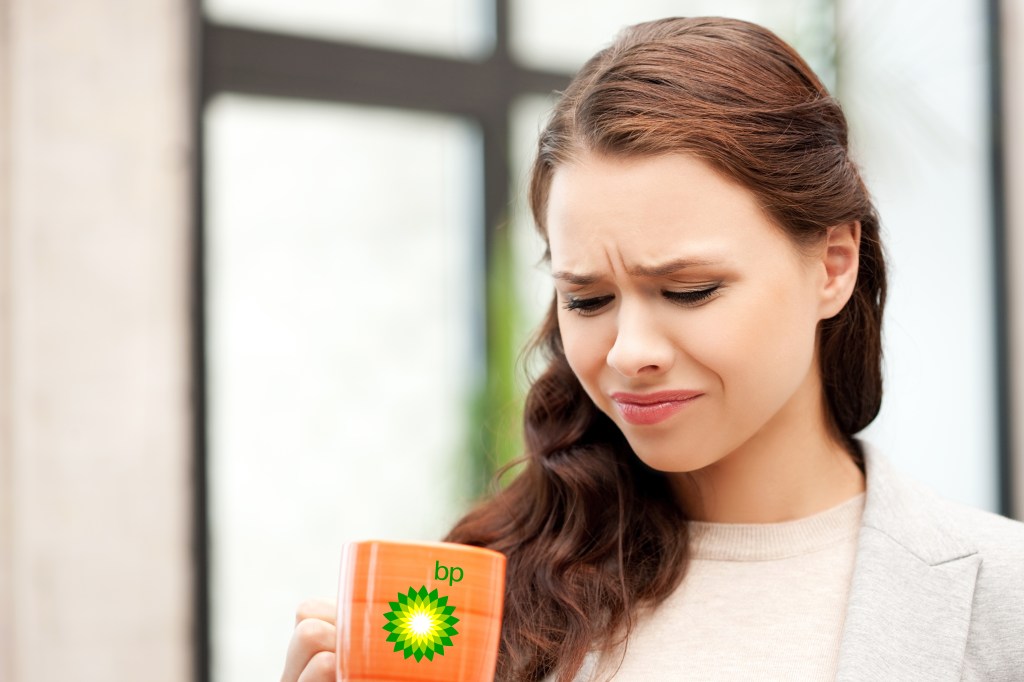
Contrary to what you may be thinking, business ethics and professional practices should be considered very carefully when creating your marketing plan. It is important to keep possible pitfalls and legal practices at the forefront of marketing considerations to avoid legal recourse as well as damage to consumer brand sentiment. Damage to a brand is difficult to repair and your company or product could become synonymous with failure. Business ethics can range from discrimination to downright disasters. Take the BP oil spill disaster for example. On April 20, 2010, the Deepwater Horizon oil rig exploded, and not only did 11 people tragically lose their lives but it also let four million barrels of oil to flow into the Gulf of Mexico over an 87 day period that caused $8.8 billion in natural resource damages (EPA, 2017). BP was said to have lacked crisis management and human compassion to deal with the disaster properly, something you think would be in place in a multi-billion dollar company, especially one that deals in hazardous materials (McClam and Weber, 2010). They spent millions of dollars, worth of marketing just to tell the world “Hey, we screwed up, ok? But, don’t worry, we’ll make it right” (McClam and Weber, 2010). Yeah, words with this kind of disaster are just about useless and actions really do speak louder than words when your “oops” destroyed an entire ecosystem. President Obama even said BP should have spent that marketing money on actually repairing the damage caused and the livelihoods that were ruined (McClam and Weber, 2010). Yikes. It’s been ten years and Americans are still bitter about it.
Adobe Stock – Syda Productions, Freebie Supply
American Marketing Association
Consulting the American Marketing Association’s Codes of Conduct is your number one resource to understand what to avoid when developing your marketing plan. These guidelines should be considered early as you could undo your carefully developed strategies, tactics, and creative resources, resulting in costly mistakes. The codes fall into two categories, ethical norms, and ethical values.
Ethical Norms
- Do no harm.
- Embrace ethical values.
Ethical Values
- Honesty – to be forthright in dealings with customers and stakeholders.
- Responsibility – to accept the consequences of our marketing decisions and strategies.
- Fairness – to balance justly the needs of the buyer with the interests of the seller.
- Respect – to acknowledge the basic human dignity of all stakeholders.
- Transparency – to create a spirit of openness in marketing operations.
- Citizenship – to fulfill the economic, legal, philanthropic, and societal responsibilities that serve stakeholders.
(Codes, 2020)
Arguably, all of these codes could apply to your marketing plan; however, focusing on what is important to your product or company should be addressed first. Whether your product is a technological wonder or your company can change the world, don’t make claims that you can’t back up. Choosing your words wisely is often the best practice. If you really want to say your product is the best whatever for whomever or is better than Brand X, you need to put in the time and effort to back up those claims. There are plenty of governmental agencies such as the Food and Drug Administration (FDA), Federal Communications Commission (FCC), U.S. Postal Service (USPS), Bureau of Alcohol, Tobacco and Firearms (ATF), and Federal Trade Commission (FTC) that are at the ready and will take you down for unsupported claims, misleading information, deceptive advertising, or defamation of other companies. There are also several other agencies that enforce federal and state laws and regulate for-profit companies and other organizations such as the Better Business Bureau (BBB) (Clow and Baack, 2018). The best advice is to avoid those claims or make sure you have the receipts to back them up.
“The most powerful element in advertising is the truth.”
Bill Bernbach, Advertising Icon
Marketing Oopsie Daisies Cannot be Unpicked
Unfortunately and fortunately, there are PLENTY of examples of ethical failings from companies both large and small, ranging from minor infractions to major disasters. And I mean MAJOR. Here are a few examples if you’re not quite convinced that ethical practices are anything to worry about.
Insys Therapeutics
A $225 million global resolution reached in June to resolve separate criminal and civil investigations concerning deceptive marketing and distribution of its opioid drug, Subsys, before subsequently filing for bankruptcy (Jaeger, 2019).
Novartis
A $700 million potential settlement announced in July in a protracted lawsuit over allegations the Swiss drugmaker paid hundreds of millions of dollars in kickbacks to doctors to induce them into prescribing drugs to patients to boost their sales (Jaeger, 2019).
Bud Light
In 2015, Bud Light had to retract the tagline “The perfect beer for removing ‘no’ from your vocabulary for the night,” printed on every bottle for their “Up for Whatever” marketing campaign after public backlash over this statement’s sexual assault vibe (Strom, 2015).
It is fortunate that we have these examples to help us learn from the mistakes of others; however, it is unfortunate that those companies took shortcuts and some had to LITERALLY pay dearly.
The Takeaway
It doesn’t matter what size company you have, you should ALWAYS practice safe marketing. Being aware of current standards and new laws and regulations—both federal and state—and having a strong moral compass are great ways to make sure you keep on the world’s good side. Say what you mean, substantiate your claims, fully disclose your practices, and do not willingly deceive the public. If you seriously ignore everything we’ve said and end up violating ethical standards, just own up to your mistake. Compliance will give your brand back its power over time and will help you learn from your own mistakes. Hopefully.
Preserve your brand and be proactive. Don’t ignore your gut and always consult the proper resources. Keep yourself and your marketing plan and creative honest first. Remember, if it feels wrong, it probably is.
GIPHY
References
Deepwater Horizon – BP Gulf of Mexico Oil Spill (2017). Retrieved from https://www.epa.gov/enforcement/deepwater-horizon-bp-gulf-mexico-oil-spill
McClam, Erin and Weber, Harry R. (June 11, 2010) BP’s Failures Made Worse by PR Mistakes, NBC25 News. Retrieved from http://www.nbcnews.com/id/37647218/ns/business-world_business/t/bps-failures-made-worse-pr-mistakes/#.XqX085NKh24
Codes of Conduct (May 10, 2019). American Marketing Association. Retrieved from https://myama.force.com/s/article/Codes-of-Conduct?_ga=2.105512004.671727110.1587394950-809646132.1585322782
Clow, Kenneth E.; Baack, Donald (2018). Integrated Advertising, Promotion, and Marketing Communications, 8th Edition. Pearson Education, Inc.
Jaeger, Jaclyn (December 27, 2019). Top Ethics and Compliance Failures of 2019, Compliance Week. Retrieved from https://www.complianceweek.com/opinion/top-ethics-and-compliance-failures-of-2019/28237.article
Strom, Stephanie. (April 28, 2015). Bud Light Withdraws Slogan After It Draws Ire Online, The New York Times. Retrieved from https://www.nytimes.com/2015/04/29/business/bud-light-withdraws-slogan-after-it-draws-ire-online.html
 the social gingerbot
You must be logged in to post a comment.